

How to Receive Foreign OEM/ODM Textile and Apparel Orders
The article provides comprehensive instructions on how to receive foreign OEM/ODM textile orders, from model differentiation, international certification standardization (BSCI, OEKO-TEX), to the 6-step negotiation and export production process.
Ta Thi Minh Phuong
Author
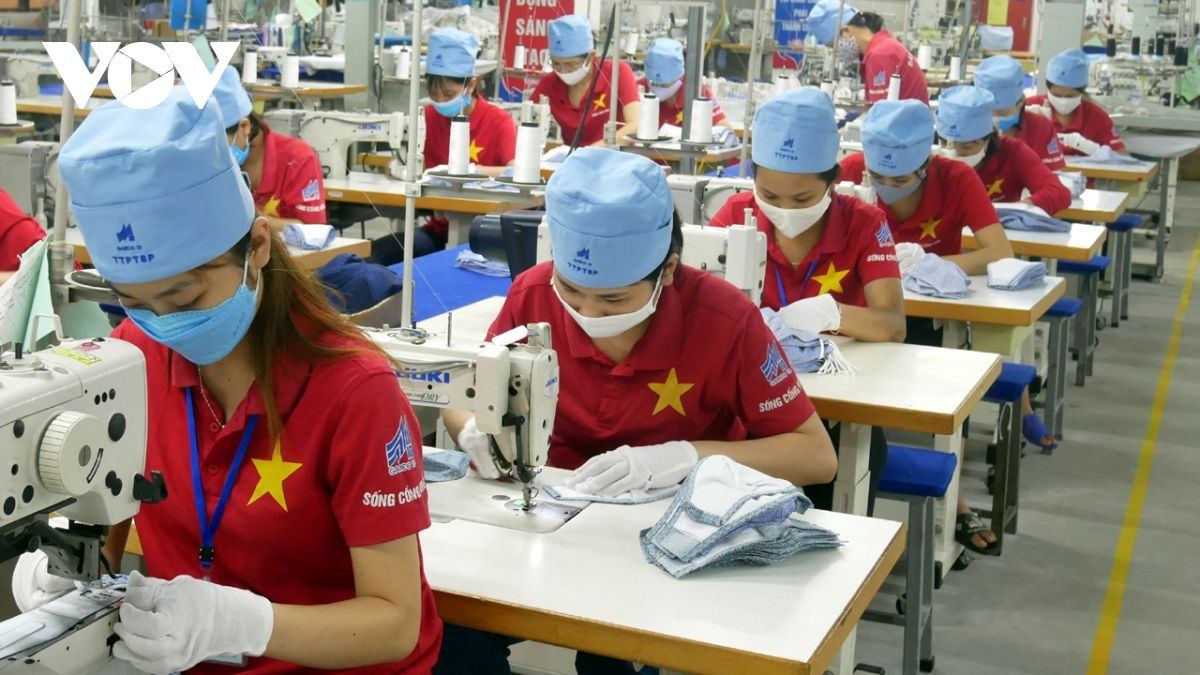
Vietnam's textile and garment industry is facing a strong breakthrough opportunity when global brands move their supply chains to Southeast Asia. However, switching from simply machining (CMT) to receiving OEM (Original Equipment Manufacturer) and ODM (Original Design Manufacturer) orders requires the factory to change its thinking in approaching customers.
This article summarizes in detail a 6-step roadmap to standardize capacity, find international partners and optimize digital sales channels to help Vietnamese textile and garment enterprises proactively welcome export capital flows.
1. Distinguishing between OEM and ODM models in the textile industry
Understanding the business model helps garment factories accurately position capacity and prepare appropriate resources before offering to the international market.
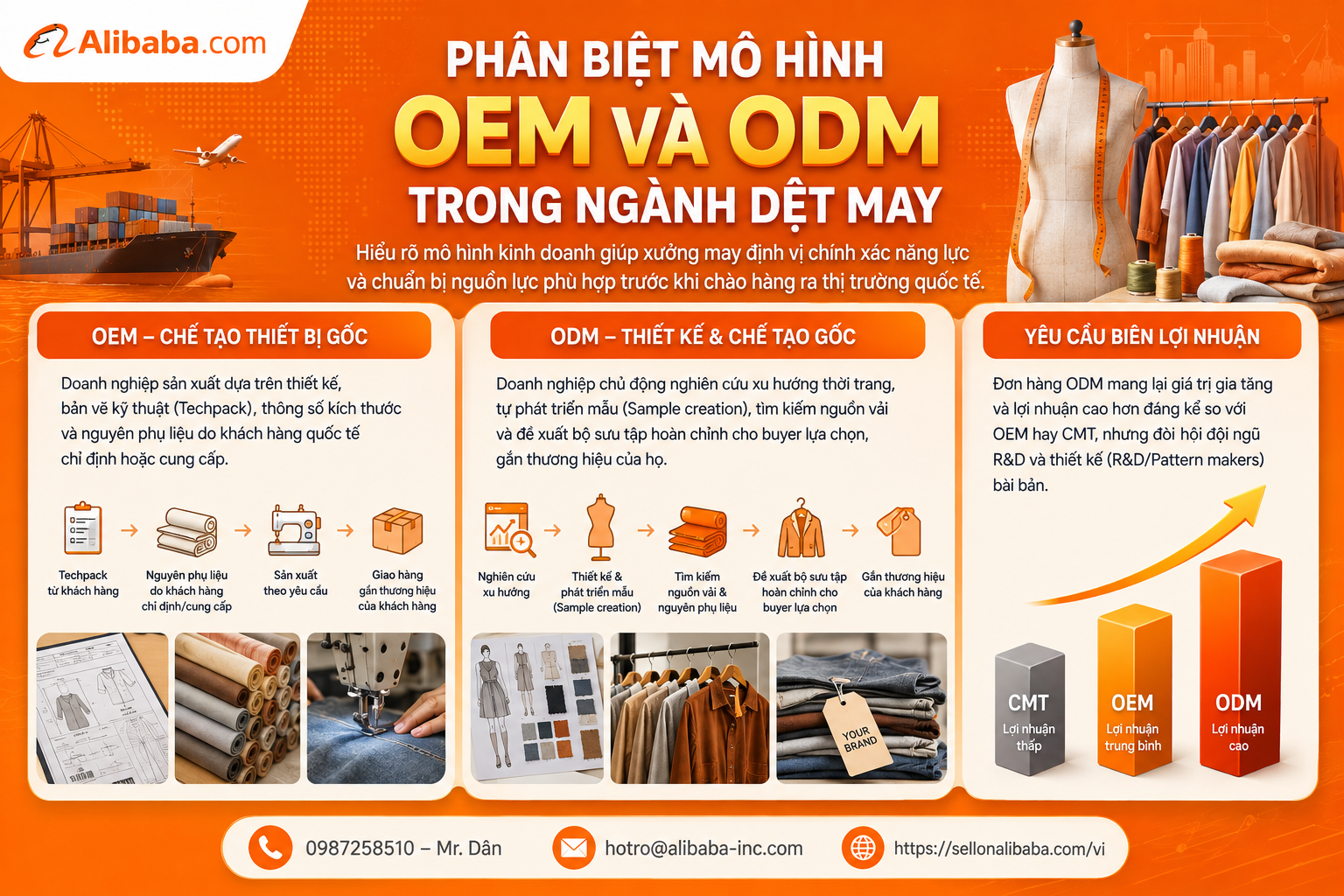
Distinguish between OEM and ODM models in the textile industry
2. Standardization of Factory Capacity and International Certification
Foreign textile and garment buyers (especially from the US, EU, Japan) have a very strict supplier evaluation process (Auditing) before placing trial orders.
Required Certifications and Competency Standards
Certification of social and environmental responsibility:BSCI, WRAP, SMETA, ISO 14001. This is the first "barrier ticket" to enter the supply chain of big brands.
Certification of product and raw material quality:OEKO-TEX Standard 100 (chemical safety on fabrics), GOTS/GRS (organic and recycled fabrics) – meets the global "green garment" trend.
Minimum production capacity (MOQ):Clearly define the minimum order quantity for each color/model (for example: 500 - 1,000 pcs/style) to easily filter the right customer base.
Sampling lead time:Standardize the process of making Lab-dip samples, Proto samples, Sales samples within 7 - 14 days.
3. Building an Online B2B Sales Channel to Reach Customers 24/7
Many traditional textile and garment businesses depend on brokers or wait for fairs. However, the current trend of international buyers is to actively search for garment factories through B2B e-commerce platforms.
Roadmap to Finding Customers Through B2B E-commerce Platform
Open standardized booth:Create an "online showroom" displaying factory scale, machinery lines (specialized such as overlock machines, automatic sewing machines, tacking machines), sewing capacity and international certifications.
Export via Alibaba:This is a global B2B platform with a huge search volume for garments from small and medium-sized fashion brands in the US, Europe, Australia and the Middle East.
Proactive order search (RFQ):Instead of passively waiting for messages, businesses exploit the RFQ (Request for Quotation) feature to send direct quotes to thousands of new garment requests posted every day.
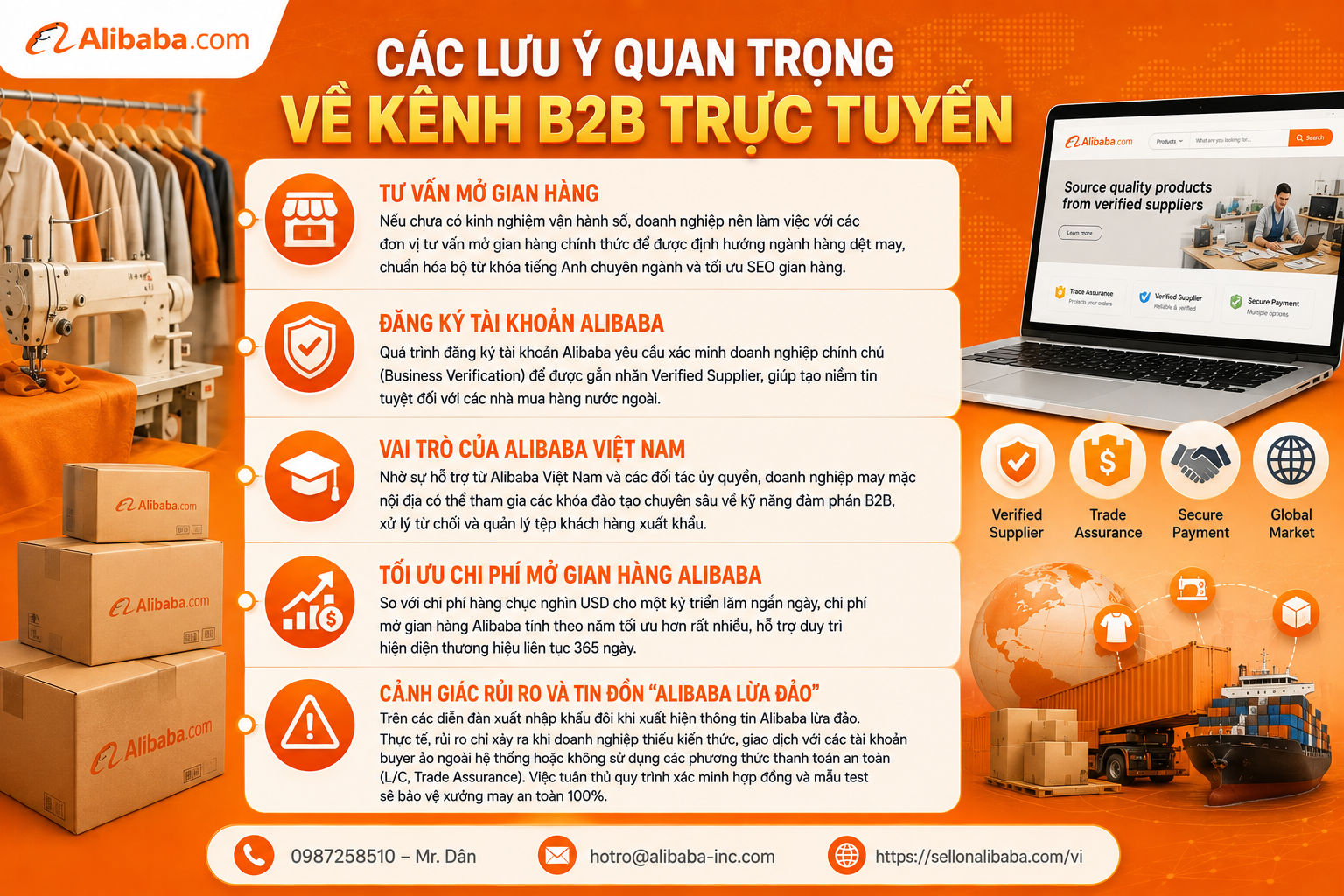
Important Notes About Online B2B Channels
4. Successful 6-Step OEM/ODM Offering Process
To turn an Inquiry into an official order, businesses need to comply with international B2B standard working processes:
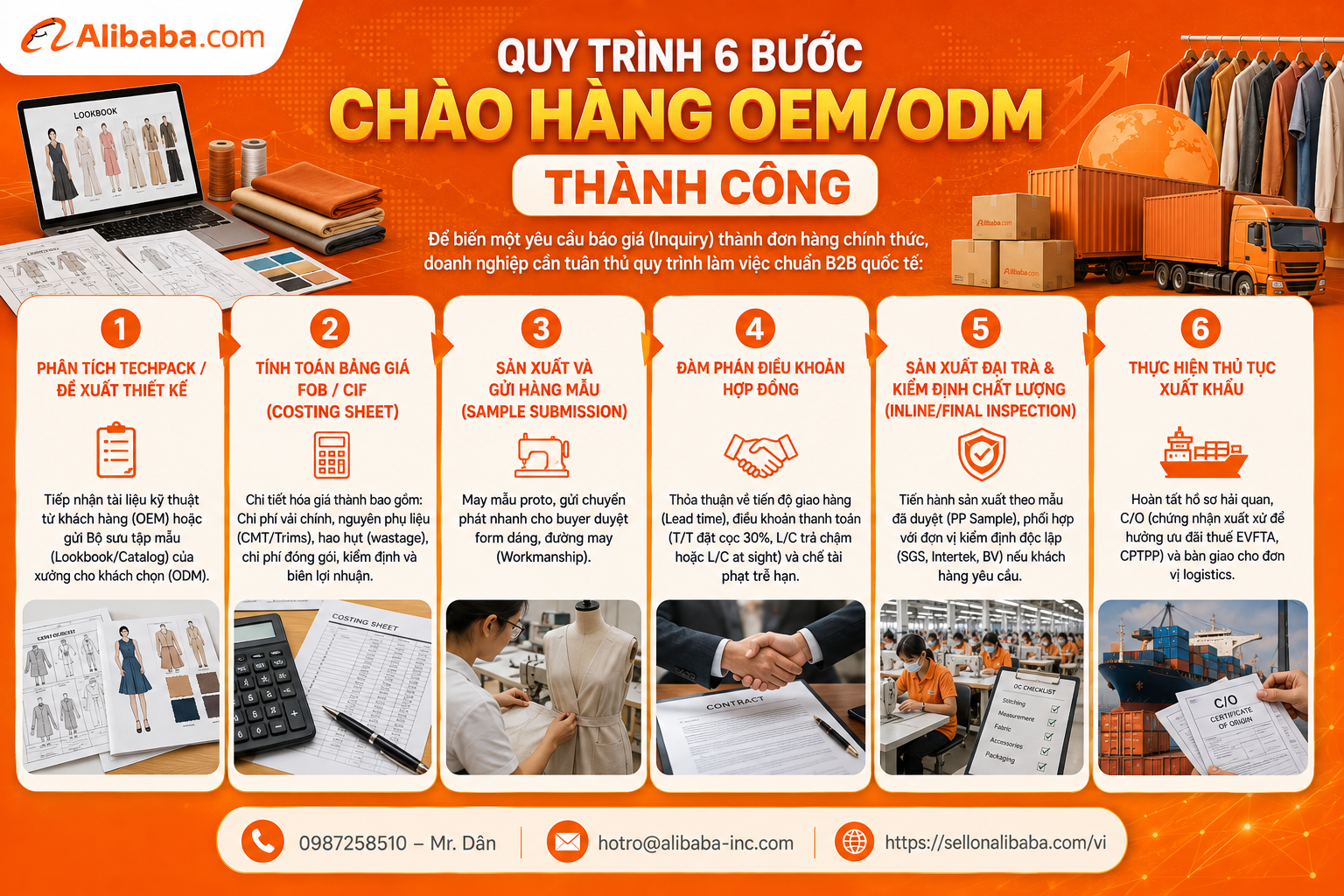
OEM/ODM offering process on Alibaba
5. Marketing Strategy and Searching for Other Apparel Buyers
Besides B2B e-commerce platforms, businesses should combine multi-channels to cover the factory brand:
Building a Business LinkedIn Profile:Post short videos of the factory in operation, quality control (QC) processes and certification images to attract Purchasing Managers/Sourcing Sourcing Directors.
Participate in specialized textile and garment exhibitions:Participate in major domestic and foreign fairs such as VTG (Vietnam), Intertextile Apparel Fabrics (Shanghai), Magic Show (USA) to meet partners directly.
Digital Marketing B2B:Build a multilingual factory website (English, Chinese, Japanese), standardize the Electronic Catalog and run search ads for OEM/ODM textile and garment keywords.
Marketing strategy and finding B2B buyers
6. Qualities that help garment factories retain foreign customers
Getting your first order is just the beginning. To create a stable revenue stream, businesses need to focus on:
Transparency in communication (Communication):Update production progress weekly for customers with actual pictures/videos.
Ensuring the accuracy of delivery time (On-time delivery):Missed delivery deadlines in the fashion industry can lead to order cancellation or air freight compensation.
Proactively propose cost-saving solutions:Advise customers to change cupping diagrams, equivalent fabrics or adjust sewing details to reduce product costs while maintaining quality.
Contact us for advice on opening a booth - Don't wait another day!
Are you in Dong Nai, Binh Duong or Ho Chi Minh City? COMPANY LIMITEDALIBABA.COMVIETNAM - ALIBABA VIETNAM is ready to support:
Head office: 19th Floor, Saigon Center Building, No. 67 Le Loi Street, Ben Nghe Ward, District 1
E-mail:[email protected]
Phone:+84 0987258510(Mr. Dan - main consultant)
Branch 1: 10th Floor, Becamex Tower, 230 Binh Duong Avenue, Thu Dau Mot, Binh Duong
Branch 2: 9th Floor, TTC Plaza, Vo Thi Sau, Thong Nhat Ward, Bien Hoa City, Dong Nai
Branch 3:123 Cong Hoa, Ward 12, Tan Binh, Ho Chi Minh City 700000, Vietnam
Call now0987258510 – Mr. Danfor free consultation, support in opening a booth, optimizing products and exporting plans to the West in 2026. No consultation fee, no commitment, just need you to be ready to act!
Related news

9/30/2025
Keyword Research Guide for the Furniture Industry
How to find what international customers are searching for and optimize your listings for visibility.
Read More →
9/21/2025
5 Mistakes to Avoid When Selling on Alibaba
Common pitfalls for new businesses starting out on Alibaba.com.
Read More →
10/17/2025
INSTRUCTIONS ON HOW TO SELL ON ALIBABA.COM
Are you ready to take your business to the international market? With a seller account on Alibaba.com, you can expand your business reach, reach millions of potential customers globally, and bring your products to the world. Below is a detailed guide to start your selling journey on Alibaba.com.
Read More →