
Comprehensive Guide to Leveraging EVFTA Tariff Preferences
Comprehensive Guide to Leveraging EVFTA Tariff Preferences: Rules of Origin Guidelines, REX Registration, and Effective B2B Storefront Solutions for EU Exports!
Ta Thi Minh Phuong
Author
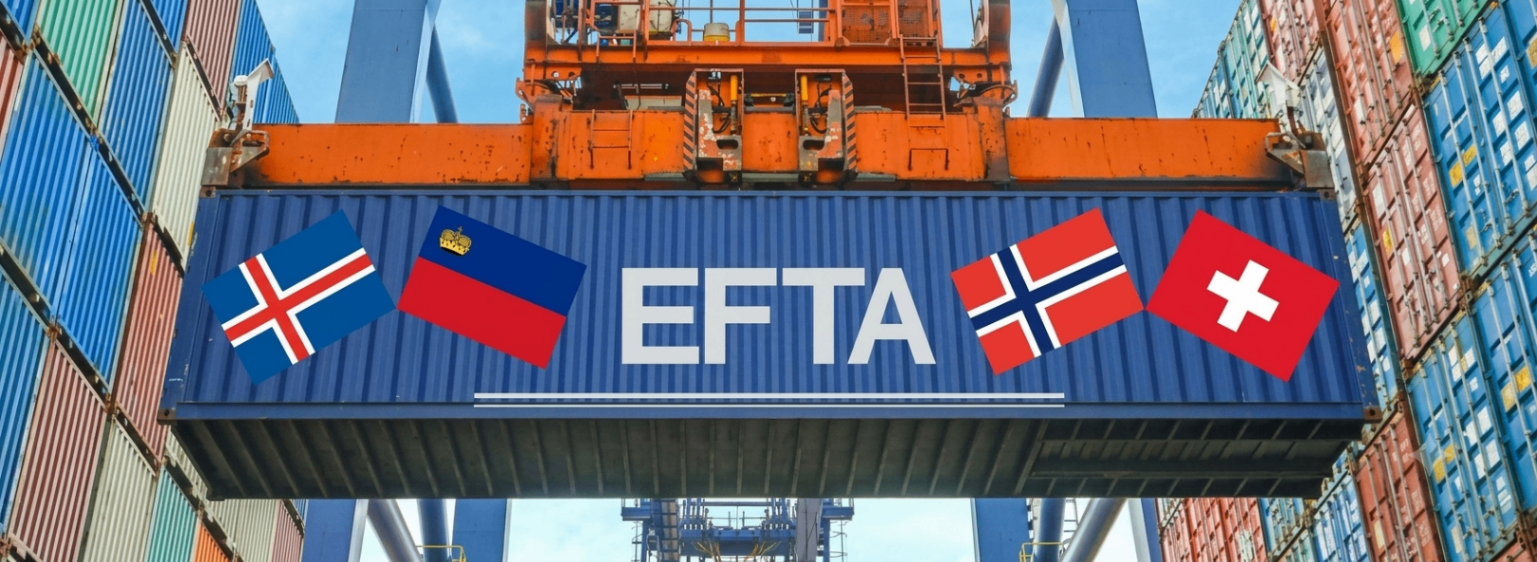
The Free Trade Agreement between Vietnam and the European Union (EVFTA) is one of the most comprehensive trade agreements with the deepest preferential rules for domestic manufacturing enterprises. The aggressive tariff reduction roadmap under the EVFTA has been creating a strategic lever, helping Vietnamese goods significantly boost their competitive edge over rivals in the European market.
This article systematically covers essential knowledge regarding EVFTA & tariff benefits for Vietnamese exports, providing a step-by-step guide to Rules of Origin (C/O Form EUR.1) and a practical roadmap for B2B enterprises to maximize these tariff preferences.
Key Takeaways
Tariff Reduction Roadmap: Nearly 99% of import duties between Vietnam and the EU will be eliminated over a 7- to 10-year transition period.
Top Beneficiary Sectors: Textiles & garments, footwear, agriculture & seafood, wooden furniture, and supporting mechanical industries.
Prerequisites: Compliance with stringent Rules of Origin criteria and possession of a valid C/O Form EUR.1 or REX system certification.
Digital Trade Promotion: Combining EVFTA tariff preferences with B2B e-commerce channels to reach the comprehensive EU buyer network.
I. Overview of the EVFTA Agreement and Tariff Elimination Roadmap
Mastering the nature of tariff commitments in the EVFTA enables businesses to identify the optimal breakthrough timing for each product category.
1. Tariff Commitments from the EU to Vietnam:
Immediate Tariff Elimination: Upon entry into force, the EU eliminated import duties on approximately 85.6% of tariff lines (representing 70.3% of Vietnam's export turnover).
7-Year Horizon: After 7 years, the EU commits to eliminating up to 99.2% of tariff lines (representing 99.7% of export turnover).
Tariff Rate Quotas (TRQ): For the remaining 0.8% of tariff lines, the EU applies TRQs to Vietnam with an in-quota import duty rate of 0%.
2. Staging Categories for Tariff Elimination:
Category A (Immediate Elimination): 0% duty rate applied immediately for high-competitiveness items such as green coffee, cashew nuts, pepper, and select fruits and vegetables.
Categories B3 - B7 (3 to 7-Year Staging): Duties are reduced annually in equal steps to 0% for key sectors, including textiles, footwear, seafood (shrimp, pangasius), and wooden furniture.
Tariff Rate Quota (TRQ) Category: 0% duty applied within quota allocations for sensitive agricultural items such as milled rice, sugar, sweet corn, and mushrooms.
II. Top Sectors Benefiting Most from EVFTA Tariff Preferences
The attraction of Vietnamese goods across the 27 EU member states has expanded rapidly due to significant tariff margin differentials:
1. Agriculture & Seafood Industry:
Coffee & Cashews: Most unroasted and processed coffee lines, as well as cashew nuts, enjoy 0% tariffs immediately or after a 3-year staging period.
Seafood (Shrimp & Pangasius): Fresh and live shrimp tariffs dropped to 0% immediately, while frozen shrimp follows a 3 to 5-year roadmap. Fresh and frozen pangasius tariffs transition to 0% within 3 years.
Fresh Fruits & Vegetables: Most tariff lines are eliminated, significantly improving the price competitiveness of Vietnamese produce in EU supermarkets.
2. Textile, Garment & Footwear Industry:
Textiles & Apparel: Average tariff rates of 12% gradually decrease to 0% over 5 to 7 years, creating a strong advantage over nations lacking an FTA with the EU.
Footwear, Luggage & Handbags: Previous tariffs ranging from 4% to 17% are completely phased out over a 3 to 7-year schedule.
3. Wood & Wooden Products:
Most indoor and outdoor wooden furniture items enjoy immediate duty elimination or a maximum 3-year roadmap, helping Vietnamese wood processing factories secure market share in Germany, France, and the Netherlands.
4. Mechanical, Hardware & Supporting Industrial Products:
Various metal components, electrical wiring, industrial plastics, and bicycle parts receive 0% tariff rates, attracting supply chain relocation demand from major European corporations.
III. Mandatory Conditions to Qualify for EVFTA Tariff Preferences
The 0% tariff rate is not applied automatically; it requires exporters to demonstrate full compliance with strict legal regulations:
1. Rules of Origin (ROO):
Wholly Obtained (WO): Applicable to agricultural and mineral products planted, harvested, or extracted entirely within Vietnam.
"Fabric-Forward" Rule for Textiles: Fabric used for garment manufacturing must be woven and finished in Vietnam or EU member states (or South Korea under the fabric cumulation mechanism).
Change in Tariff Classification (CTC): Raw materials imported from third-party countries must undergo substantial processing in Vietnam, resulting in an HS Code change at the 2-digit (CC), 4-digit (CTH), or 6-digit (CTSH) level.
2. Mandatory Origin Certification Documents:
Certificate of Origin (C/O) Form EUR.1: Issued by the Import-Export Management Department (Ministry of Industry and Trade of Vietnam) or VCCI for shipments valued over EUR 6,000.
Registered Exporter System (REX System): Applies to shipments where registered enterprises self-certify origin on commercial invoices according to EU regulations.
IV. 5-Step Roadmap to Leverage the EVFTA and Boost B2B Exports
To turn tariff preferences into actual purchase orders, manufacturing enterprises should execute the following optimized 5-step roadmap:
5-Step Roadmap for B2B Export Acceleration:
HS Code Verification & Tariff Comparison: Identify exact HS codes to cross-reference MFN vs. EVFTA tariff rates.
Supply Chain Audit for Origin Compliance: Verify raw material suppliers against "Fabric-forward" or CTC criteria.
C/O Form EUR.1 / REX Registration: Complete export documentation and obtain valid origin certificates before shipping.
B2B E-Commerce Digitization: List EVFTA-compliant products on international B2B marketplaces to connect directly with verified EU buyers.
Logistics & Customs Alignment: Coordinate with freight forwarders to ensure 100% data consistency across C/O Form EUR.1, Bill of Lading, and Customs Declarations.
V. Top 4 Critical Errors to Avoid When Utilizing EVFTA Tariff Preferences
Mixing Non-Compliant Raw Materials:
Unilaterally changing third-country material suppliers without re-verifying value-addition percentages can lead to C/O rejection by EU customs authorities.
Data Discrepancies Between C/O EUR.1 and Customs Declarations:
Product descriptions, HS Codes, gross/net weights, and invoice numbers on C/O Form EUR.1 must match sea waybills and customs declarations 100%.
Overlooking Non-Tariff Barriers (SPS/TBT):
A 0% tariff preference becomes meaningless if a shipment is rejected at destination ports due to plant quarantine violations, illegal chemical residues (MRLs), or missing CE Marking labels.
Failing to Retain Origin Proof Records:
Enterprises are legally obligated to archive all input material invoices and production cost accounting documents for a minimum of 5 years for post-clearance audits by Vietnam and EU Customs authorities.
VI. Conclusion
Understanding the EVFTA & tariff benefits for Vietnamese exports illuminates both strategic opportunities and technical requirements. Mastering rules of origin, standardizing C/O Form EUR.1 documentation, and proactively driving digital B2B trade promotion serve as the "golden key" for Vietnamese manufacturers to fully unlock the potential of the European market.
Contact for Store Setup Consultation – Don't Wait Another Day!
Are you located in Dong Nai, Binh Duong, or Ho Chi Minh City? ALIBABA.COM VIETNAM CO., LTD - ALIBABA VIETNAM is ready to support your export journey:
Headquarters: 19th Floor, Saigon Centre Building, 67 Le Loi Street, Ben Nghe Ward, District 1, Ho Chi Minh City
Email: [email protected]
Phone: +84 0987258510 (Mr. Dan)
Branch 1: 10th Floor, Becamex Tower, 230 Binh Duong Boulevard, Thu Dau Mot, Binh Duong
Branch 2: 9th Floor, TTC Plaza, Vo Thi Sáu Street, Thong Nhat Ward, Bien Hoa City, Dong Nai
Branch 3: 123 Cong Hoa Street, Ward 12, Tan Binh District, Ho Chi Minh City 700000, Vietnam
Call 0987258510 – Mr. Dan now for a free consultation, storefront setup support, product listing optimization, and an actionable 2026 export strategy to European markets. No consultation fee, no commitment required—just bring your readiness to scale!
Related news

9/30/2025
Keyword Research Guide for the Furniture Industry
How to find what international customers are searching for and optimize your listings for visibility.
Read More →
9/21/2025
5 Mistakes to Avoid When Selling on Alibaba
Common pitfalls for new businesses starting out on Alibaba.com.
Read More →
10/17/2025
INSTRUCTIONS ON HOW TO SELL ON ALIBABA.COM
Are you ready to take your business to the international market? With a seller account on Alibaba.com, you can expand your business reach, reach millions of potential customers globally, and bring your products to the world. Below is a detailed guide to start your selling journey on Alibaba.com.
Read More →