
Writing SEO product titles for B2B marketplaces: 6 formulas
Six SEO product-title formulas for B2B marketplaces: structure, length, keyword placement, five ranking mistakes and a six-point pre-publish checklist.
Ta Thi Minh Phuong
Author
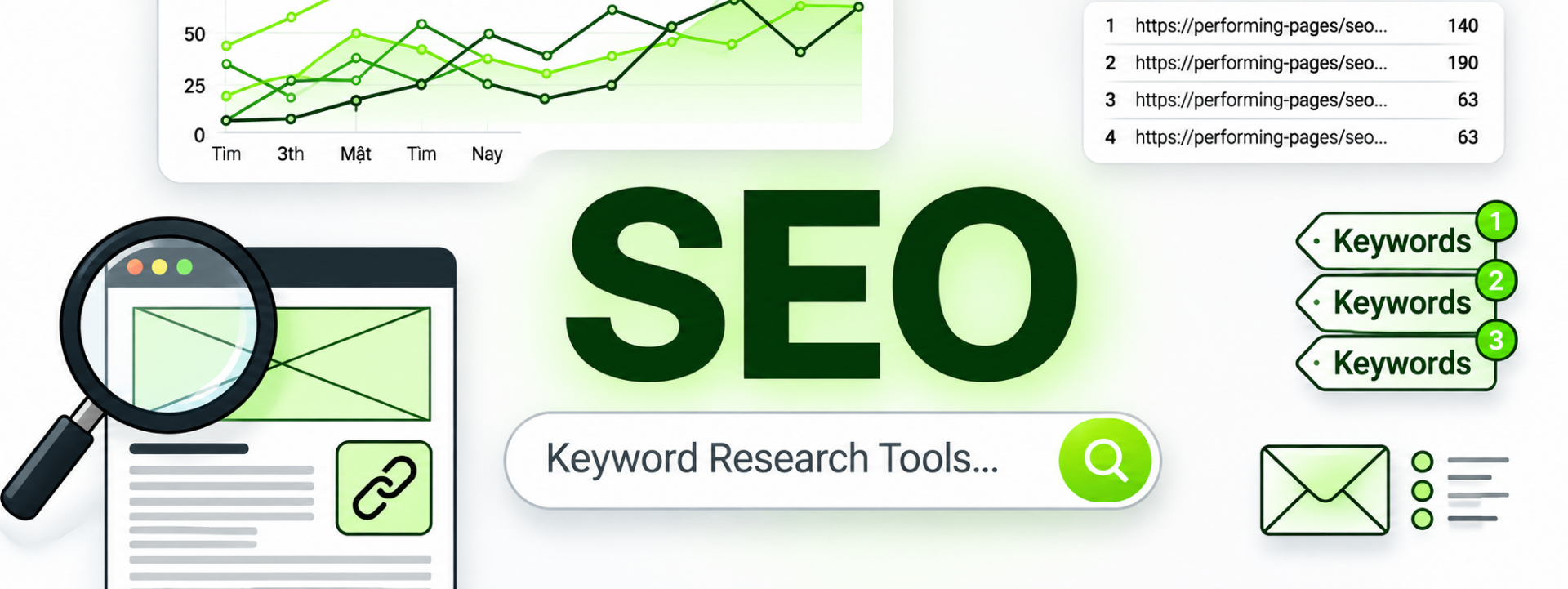
The product title is the only element that appears in all three places at once: search results, the buyer's comparison list, and the body of notification emails. A strong title must contain the keyword buyers actually type plus one attribute that sets your product apart — and read in three seconds. Generic titles cut click-through, drag down your quality score and push ad costs up.
1. Why does the title decide most of the outcome?
Buyers scan titles before they look at images. In a list of 40 results, the eye stops only on lines whose keywords match what the buyer wants.
The title affects quality score. The algorithm scores how well title, keyword and content agree; when they drift apart, you pay more for the same position.
The title is filter data. Many marketplace filters read attributes straight from the title; a missing attribute means lost impressions.
A good title drives cross-selling. When a buyer searches for one product, your title can lead them to another product group.
2. Six effective title formulas
Core keyword + technical specification: "Ceramic Mug 350ml, Matte Glaze, Dishwasher Safe".
Keyword + material + certification: "Bamboo Cutting Board, FSC Certified, 40x30cm".
Keyword + application: "Cotton Tote Bag 280gsm for Supermarket Promotion".
Keyword + customisation capability: "Stainless Steel Bottle, Custom Logo, OEM Available".
Keyword + capacity or packaging: "Rattan Basket Set of 3, 25,000 pcs Monthly Capacity".
Keyword + target market or standard: "Organic Cashew W240, HACCP, EU Compliant".
Each formula has a purpose: 1 and 2 suit mainstream products, while 4 and 6 filter for serious buyers.
3. The standard structure of a B2B title
The core keyword sits within the first 3–5 words. This is the position favoured by algorithm and reader alike.
The differentiating attribute comes straight after the keyword: material, size, certification or customisation capability.
Do not stack more than three attributes. From the fourth onward, the line is usually truncated on mobile.
Use commas to separate clusters, never slashes or special characters.
Capitalise the first letter of each cluster, never the whole title.
4. Length and keyword position
The right length: roughly 60–100 characters. Shorter loses attributes; longer gets cut off.
The keyword appears only once. Repetition adds no score and makes the title harder to read.
Never use another company's brand name in the title — it puts the listing at risk of removal.
Check the title on a mobile screen after publishing: most buyers browse on a phone.
5. Five mistakes that drag a title down the rankings
Keyword stuffing that turns the sentence into nonsense: "mug ceramic mug wholesale mug factory mug".
Self-praise words: "best quality", "high quality", "competitive price" carry no search value and dilute the attributes.
All-caps titles or piled-on exclamation marks.
Wrong units of measure: stating "cm" when the target market uses "inch".
A title that does not match the image and description, so buyers open the page and close it at once — a high bounce rate erodes ranking.
6. A workflow for writing 20 titles in one hour
List 10 keywords that buyers use, from keyword tools and questions existing customers have asked.
Pick the five most important attributes for each product group.
Combine them with the formulas in section 2, producing two different versions for every product.
Read each title aloud. If you must pause for breath more than twice, it is too long.
Drop titles that overlap by more than 70% so that you do not end up competing with yourself.
7. Six checks before you publish
Is the core keyword within the first five words?
Is there at least one quantitative attribute (size, weight, capacity)?
Is the length between 60 and 100 characters?
Are there no self-praise words and no all-caps?
Does the title match the product image and description?
Have you checked it on a mobile screen?
8. Frequently asked questions
Should the price go into the title? Not for B2B goods: prices move, and a title price invites the wrong comparisons. Keep pricing in the quotation section.
Do English titles need a translation for each market? For large markets such as Japan, Korea and China, add a local-language version in the description; keep the title in English so data stays consistent.
How often should titles be reviewed? Once a quarter, or whenever click-through drops sharply while impressions stay flat.
9. Conclusion
The product title is the most powerful free search tool on your storefront. Three things worth doing now: choose 10 core keywords, rewrite 20 titles using the six formulas, and re-check them on mobile after publishing.
If you are preparing to open an Alibaba storefront and need all your product content brought up to B2B standards, the Alibaba Vietnam team can review it category by category.
Talk to an advisor
ALIBABA.COM VIETNAM CO., LTD — ALIBABA VIETNAM
Head office: 19th Floor, Saigon Centre, 67 Le Loi Street, Ben Nghe Ward, District 1, Ho Chi Minh City
Branch: 10th Floor, Becamex Tower, 230 Binh Duong Boulevard, Thu Dau Mot, Binh Duong
Branch: 9th Floor, TTC Plaza, Vo Thi Sau Street, Thong Nhat Ward, Bien Hoa, Dong Nai
Call 0987258510 — Mr. Dân for a free consultation on product titles and storefront content optimisation.
Related news

9/30/2025
Keyword Research Guide for the Furniture Industry
How to find what international customers are searching for and optimize your listings for visibility.
Read More →
9/21/2025
5 Mistakes to Avoid When Selling on Alibaba
Common pitfalls for new businesses starting out on Alibaba.com.
Read More →
10/17/2025
INSTRUCTIONS ON HOW TO SELL ON ALIBABA.COM
Are you ready to take your business to the international market? With a seller account on Alibaba.com, you can expand your business reach, reach millions of potential customers globally, and bring your products to the world. Below is a detailed guide to start your selling journey on Alibaba.com.
Read More →